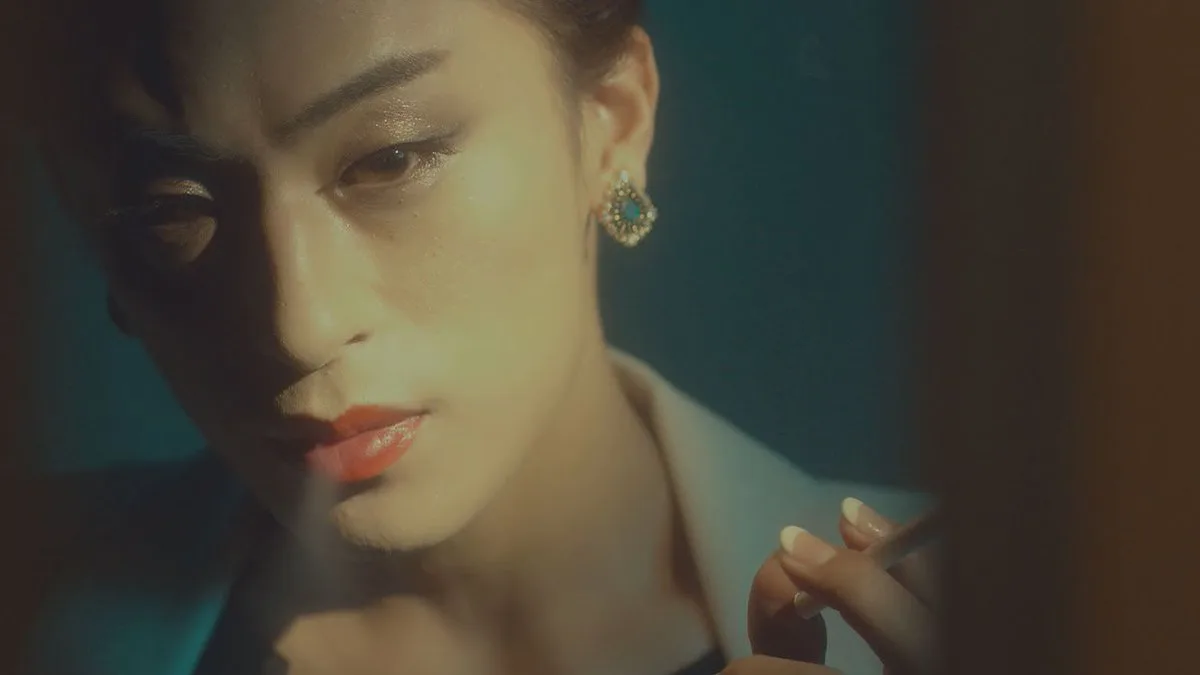

Lately I keep replaying scenes from one particular film in my head.
Jane (꿈의 제인), a 2017 Korean indie by director Cho Hyun-hoon. It follows the bleak reality of runaway teenagers and the warm, mysterious comfort offered by Jane—played by Koo Kyo-hwan—a transgender woman. Quick confession about my taste in movies: I actually like the ones that leave you a little unsettled, the kind that trail you around all day. Not the feel-good stuff. The films that keep scratching at some corner of your mind for days.

These are the lines that stuck with me the most:
"What's the point of living such a damn miserable life alone? That's why we live together."
"I don't know how. How you're supposed to be with people."
"Let's not die. Let's live unhappily, for a long, long time. And let's meet again next year, and the year after that. With unhappy faces, right here in New World."
"You'll never be loved. Because you only love someone in order to be loved."
"A person is finished the moment they turn dull."
"Hi. I'm doing okay. Not that you'd wonder…"
"If you get to be happy just once, like this—that's enough. That's the whole thing."
Why do these sentences keep circling in my head?
Honestly, I get it. When I was younger, I genuinely thought the world was a bright, beautiful place. That lasted right up until I actually understood the machinery—capitalism running on endless competition and output, and the particular flavor of Korean culture stacked on top of it. After that, not a single day passed without working, growing, pushing, straining. What's going to blow up today? What stress is waiting around the corner? What's broken now? At first I thought all of it was effort. Progress. A process heading in the right direction.
Turns out, no. Jane was right. Life is mostly dull and unhappy, and we get through it on the strength of a few fleeting happy moments. Nobody's life unfolds like a movie—flawless and beautiful, start to finish.
The default setting of life is suffering.

Rich or poor, well-educated or not, healthy or not—everyone carries their own private weight, their own relentless set of worries. Happiness is a purely subjective sensation. There's no "absolute, objective happiness" running through the world. It was never there to begin with.
Here's what I found out later: this isn't just my own cynical little theory. The very first thing Buddhism teaches is dukkha—that existence is, at its core, suffering (the first of the Four Noble Truths). Schopenhauer went a step further and argued that we swing like a pendulum between the pain of wanting and the boredom of having. Desire unmet, you suffer; desire met, you're bored soon enough. Which is exactly why that line—a person is finished the moment they turn dull—lands so strangely. People have known this for thousands of years. Life is, by default, kind of a bummer.
So then—what do you do with that? This is where it splits.
Camus, writing about Sisyphus condemned to shove his boulder up the hill forever in an absurd universe, still concluded that we "must imagine Sisyphus happy." If there's no built-in meaning, we just make it ourselves. Viktor Frankl, who survived Auschwitz, put it like this: the person who has a why to live can bear almost any how. What keeps us going isn't the absence of suffering. It's the meaning we attach to it.
And oddly enough, that made my own direction clearer.
Push to the absolute limit and prove an undeniable, overwhelming return—the kind no one can argue with. Then reach past the narrow self, the little "me," to contribute to something larger, to make this world even slightly more meaningful. Isn't that the actually-right direction?
This is a deeply personal definition, of course. I'm not going to pretend it's the answer. But me—I've decided to look for the meaning of my life inside intensity and devotion.
Just like that last line in the film. Let's not die. Unhappily. For a long, long time.
Enjoyed this story?
Get new posts delivered straight to your inbox.

Comments
Leave a comment